Relocating Families South Florida Homes Guide for 2026
Explore relocating families South Florida homes across Palm Beach County. Compare neighborhoods, schools, and costs—contact SoFlo Group to start today.
Relocating families South Florida homes searches have surged as more households trade colder states, higher taxes, and long commutes for sunshine, space, and a lower cost of living. Unlike the typical "moving to Miami" story, South Florida actually spans three distinct counties — Miami-Dade, Broward, and Palm Beach — and each one offers a very different lifestyle, price point, and school landscape for a relocating family. This guide covers all three counties in depth, walks through the full relocation process step by step, and answers the questions families ask most before they sign a contract.
Quick answer: Relocating families South Florida homes are concentrated in family-friendly pockets across all three counties — think Weston and Parkland in Broward, Pinecrest and Palmetto Bay in Miami-Dade, and Boca Raton, Wellington, and Jupiter in Palm Beach County. The right pick depends on commute distance, school zoning, flood risk, and HOA rules — not just price per square foot. A local advisor who tracks all three counties can usually narrow the list within a single consultation.
What Are Relocating Families South Florida Homes?
Relocating families South Florida homes are residential properties — single-family houses, townhomes, and family-sized condominiums — purchased by households moving into the tri-county region from elsewhere. In other words, these are primary residences chosen with schools, safety, and long-term livability in mind, not investment returns. Consequently, this buyer group weighs features differently than retirees or short-term rental investors do.
For instance, a relocating family typically values bedroom count and yard space more than a water view. Similarly, a strong school zone usually outweighs walkability to nightlife. As a result, the same budget can point two different families toward completely different counties, even when both are searching the same week.
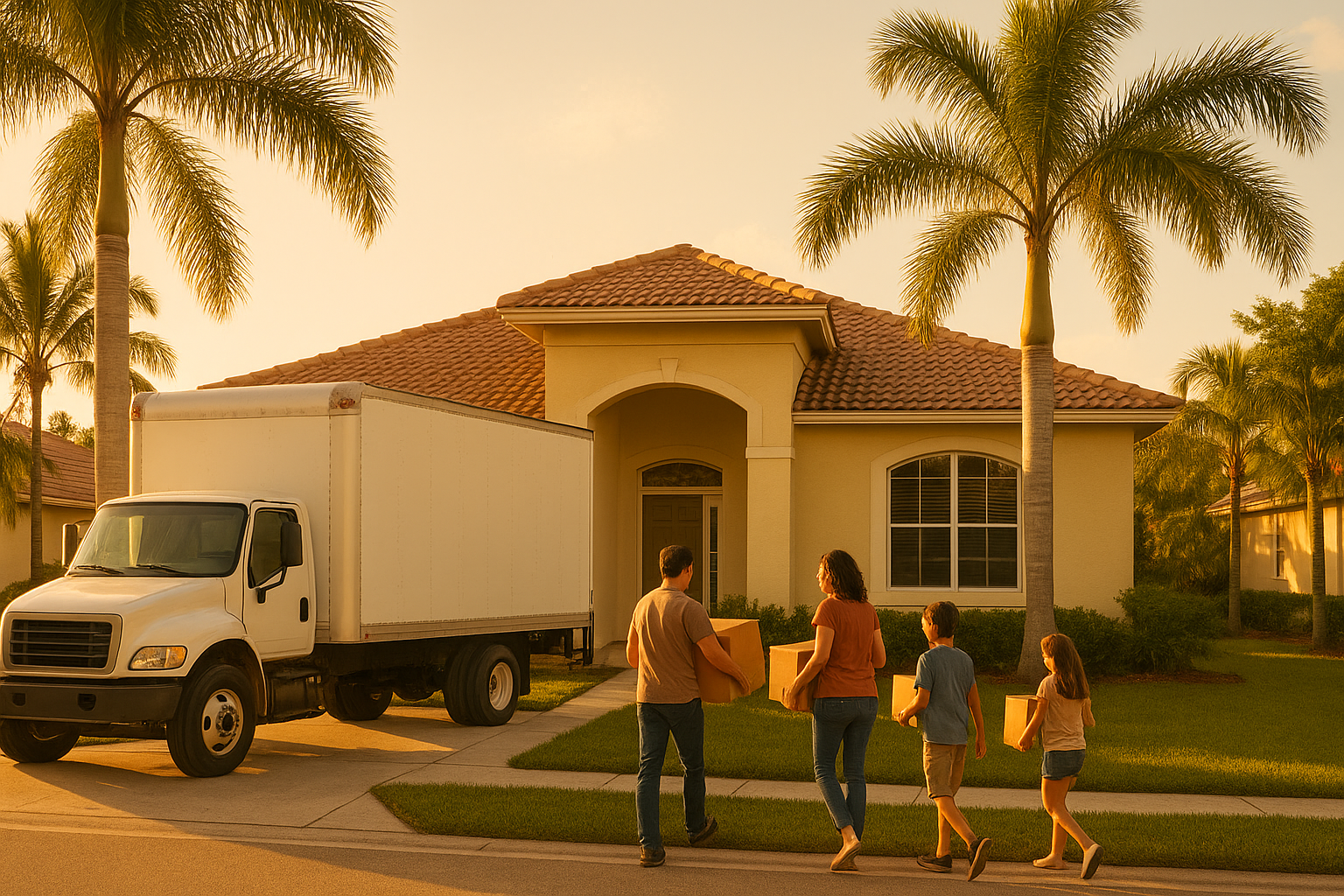
Relocating families South Florida homes often combine practical layouts with family-friendly outdoor space.
Why Families Are Moving to South Florida
Florida has ranked among the top states for net domestic migration for several years running, according to U.S. Census Bureau migration data, and a sizable share of that growth has landed in the South Florida tri-county area. Families frequently cite no state income tax, warm year-round weather, and a growing job market as the main drivers. However, the appeal runs deeper than the balance sheet.
In particular, relocating households are drawn to the sheer variety of community types on offer — golf course neighborhoods, walkable downtown districts, equestrian estates, and new master-planned developments all exist within an hour's drive of each other. Furthermore, the mix of public and private school options gives families more flexibility than smaller markets typically allow. For a deeper look at how relocation support works across this market, the South Florida relocation services guide breaks down what to expect at each stage of a move.
Best South Florida Neighborhoods for Relocating Families, County by County
Above all, picking a county first — then a neighborhood — saves relocating families from touring homes that look great on paper but miss on commute or school fit. Below is a breakdown of where families tend to land in each of the three South Florida counties.
Miami-Dade County Communities for Family Relocation
Miami-Dade is not just high-rise condos and nightlife. Pinecrest and Palmetto Bay offer tree-lined streets, large lots, and some of the county's top-rated public schools. Coral Gables brings historic charm, strict architectural standards, and strong resale value, while Doral attracts families who want newer construction, HOA amenities, and quick access to the airport for frequent travelers.
Broward County Communities for Family Relocation
Broward County often delivers more house for the money than its neighbors. Weston and Parkland are consistently ranked among the safest cities in Florida, with A-rated schools and master-planned layouts built around parks and lakes. Plantation and Davie offer slightly older, more affordable housing stock with easy access to both Fort Lauderdale and the Sawgrass employment corridor.
Palm Beach County Communities for Family Relocation
Palm Beach County remains one of the strongest draws for relocating families South Florida homes searches, and for good reason. Boca Raton offers top-rated schools and established suburban neighborhoods. Wellington is known for its equestrian culture and spacious lots. Jupiter and Palm Beach Gardens attract families who want newer construction paired with easy highway access, while West Palm Beach appeals to those who prefer a shorter commute into a walkable downtown. Meanwhile, Royal Palm Beach and Boynton Beach provide more affordable entry points without sacrificing proximity to good schools.
Therefore, it is worth comparing at least two or three towns across two different counties before narrowing a search, since price per square foot — and property tax rates — can vary significantly even between neighboring communities. The South Florida market comparison guide breaks down how these counties stack up against other Florida regions on price, inventory, and growth.
Finding Relocating Families South Florida Homes: Where to Start
Finding relocating families South Florida homes usually starts with narrowing the search by school zone, commute tolerance, and budget before touring any properties. Above all, it helps to use a property search tool that filters by community type rather than price alone, since a condo and a single-family home at the same price point serve very different household needs. The guide to finding homes for sale in South Florida walks through how to set up an efficient search from out of state.
In addition, buyers relocating from a different market often benefit from touring homes virtually first, then scheduling an in-person visit only for serious contenders. This approach saves travel time while still allowing families to confirm noise levels, parking, and neighborhood feel before making an offer. You can also start a direct search anytime at soflorealestate.com.
New Construction and Pre-Construction Options for Families
New and pre-construction developments have become a popular option for relocating families who want modern layouts, builder warranties, and resort-style amenities such as pools, clubhouses, and walking trails. Specifically, many of these communities are built with families in mind, offering multiple floor plans so buyers can match square footage to household size. Consequently, pre-construction can be appealing for families with a flexible timeline.
That said, buyers should confirm construction completion dates, HOA fee structures, and any deed restrictions before signing a contract. For families also comparing larger or multi-unit properties, the multi-family homes guide for South Florida outlines how those options differ from standard single-family purchases.
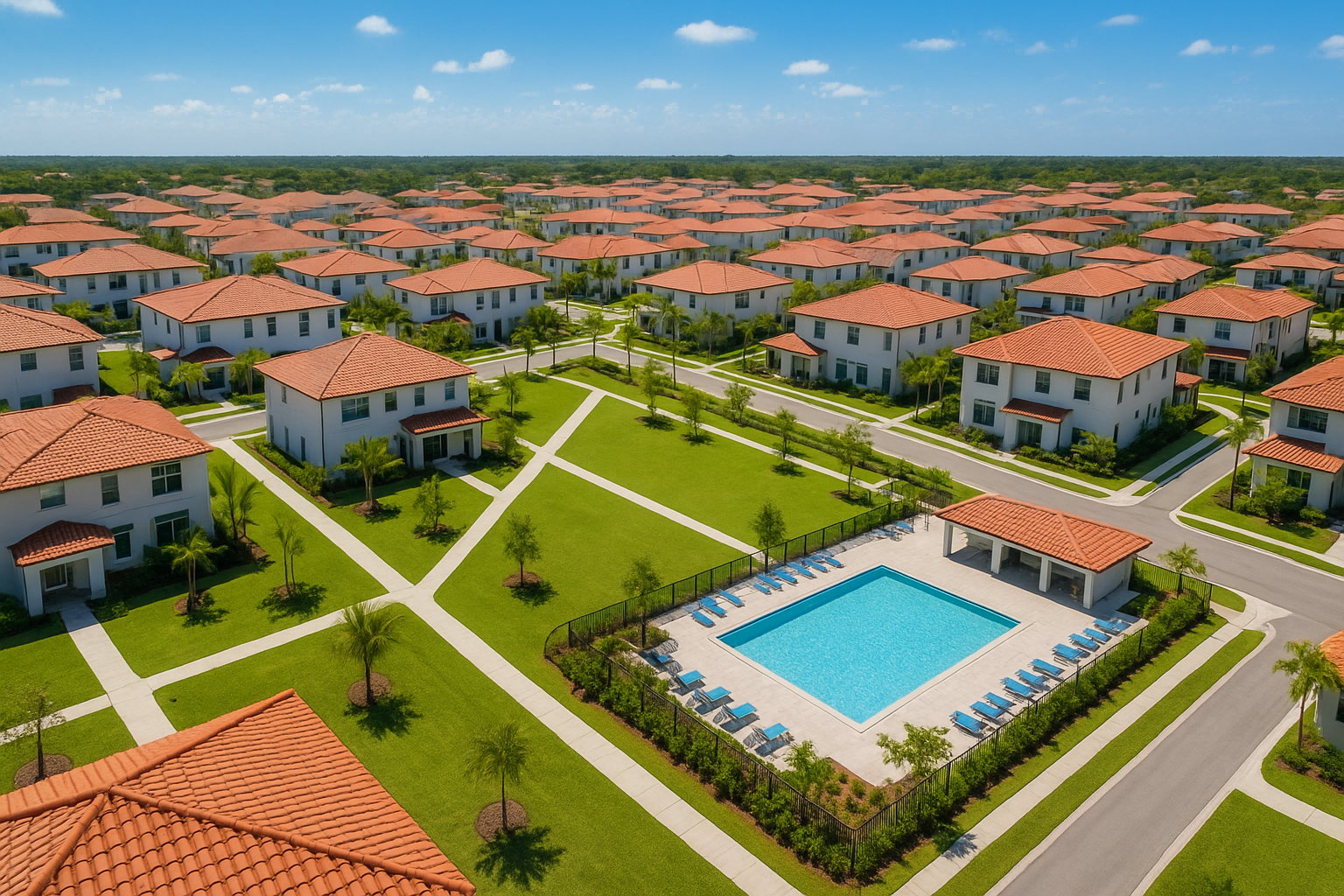
Pre-construction communities give relocating families more choice over layout and amenities.
How to Relocate to South Florida: A Step-by-Step Process
Although every move looks a little different, most successful relocations follow a similar sequence. Below is a practical framework families can use to stay organized from the first search to the moving truck pulling away.
- Define household priorities. List must-have features such as school zones, commute distance, yard space, and budget before searching so the home search stays focused and efficient.
- Pick a county, then a neighborhood. Decide between Miami-Dade, Broward, and Palm Beach County based on commute, school ratings, and lifestyle before comparing individual towns within that county.
- Secure financing and pre-approval. Obtain mortgage pre-approval early so offers can move quickly once the right home is found, which matters in competitive South Florida markets.
- Tour homes with a local advisor. Work with a South Florida real estate advisor to schedule in-person or virtual tours, compare similar listings, and evaluate long-term resale potential.
- Negotiate, inspect, and close. Submit an offer, complete inspections and due diligence, and finalize financing before closing so the transition to the new home goes smoothly.
- Enroll in schools early. Contact the county school district or chosen private school as soon as an address is confirmed, since enrollment windows and required documents vary by district and can take several weeks to process.
- Transfer utilities and update records. Schedule electricity, water, and internet connections before move-in day, and update your driver's license, vehicle registration, and voter registration within Florida's required timeframes.
Costs and Considerations When Moving to South Florida
Beyond the purchase price, relocating families should budget for property taxes, homeowners insurance, and potential HOA or condo association fees. Florida's property tax rates and homestead exemption rules are detailed on the Florida Department of Revenue website, which is a useful reference for new residents. Insurance costs in particular can vary widely depending on flood zone designation and proximity to the coast.
Moreover, families should ask about vacation rental restrictions if resale flexibility matters later, along with any pending special assessments in condo or HOA communities. For more detail on how a buyer's agent helps manage these details during a purchase, the South Florida buying guide covers the full transaction process. Learn more about Palm Beach County's geography and communities on its Wikipedia overview as a general reference point.
Flood Zones, Insurance, and Hurricane Season Planning
Relocating families coming from inland states often underestimate how much flood zone designation (the FEMA-assigned risk rating for a property's flood exposure) affects both insurance cost and loan requirements. Before writing an offer, check a property's flood zone status through FEMA's official flood map service, since homes in high-risk zones typically require separate flood insurance on top of a standard homeowners policy. In addition, every South Florida homeowner should have a basic hurricane season plan — generally running June through November — that covers evacuation routes, window protection, and an emergency supply kit. Families new to the region often find it reassuring to build this into their first-year budget rather than treating it as an afterthought.
Schools and Family Life in South Florida
School quality is consistently the single biggest factor relocating families mention during a search, and South Florida offers more flexibility here than most markets of comparable size. Miami-Dade, Broward, and Palm Beach each run their own public school district, and school grades can shift meaningfully from one zip code to the next even within the same city. Consequently, it is worth checking a specific address against the district's current zoning map rather than relying on a neighborhood's general reputation alone.
Private and charter school options are also widely available across all three counties, which gives families an alternative when a specific public zoning doesn't fit. Furthermore, after-school programs, youth sports leagues, and community pools are common amenities in family-oriented developments, particularly in newer Broward and Palm Beach County communities built around central parks. Above all, families should tour a neighborhood during a typical weekday afternoon, not just on a weekend, to get a realistic sense of school traffic and foot traffic near the home.
Common Mistakes Relocating Families Make
A common mistake is choosing a home based on photos alone without checking flood zone status or visiting during peak traffic hours. Similarly, some families underestimate HOA fees and skip reading the association's rules on rentals, pets, and renovations before closing. In contrast, families who work with a local advisor and request a full disclosure package early tend to avoid these surprises — and often negotiate better terms as a result.
Frequently Asked Questions About Relocating Families South Florida Homes
What are relocating families South Florida homes?
Relocating families South Florida homes are residential properties chosen by households moving from out of state or out of the region, with features suited to schools, space, and family life. They are typically single-family houses, townhomes, or condos in established or newly built communities across Miami-Dade, Broward, or Palm Beach County.
Which South Florida areas are best for relocating families?
Weston, Parkland, Pinecrest, Boca Raton, Palm Beach Gardens, Wellington, and Jupiter are consistently popular due to their schools, parks, and planned communities. That said, the right fit depends on commute needs, budget, and lifestyle preferences.
How much does it cost to relocate to South Florida?
Costs vary by county, neighborhood, and home type, but buyers should budget for property taxes, homeowners insurance, flood insurance where applicable, and potential HOA fees beyond the purchase price. A local advisor can provide a more precise estimate based on specific listings.
How long does it take to buy a home when relocating to South Florida?
A typical purchase takes roughly 30 to 60 days from accepted offer to closing. However, timelines can shift based on financing, inspections, and out-of-state coordination.
Is it better to rent or buy first when relocating to South Florida?
Some families rent briefly to learn the area before committing to a neighborhood, while others buy right away if they already know their target community. The right approach depends on job timing and school enrollment deadlines.
What school factors should relocating families consider in South Florida?
Families should research public school zoning, private school availability, and proximity to after-school programs before choosing a neighborhood. School quality often affects long-term resale value as well.
Are new construction homes a good option for relocating families?
New construction and pre-construction homes appeal to families wanting modern layouts, warranties, and amenities. Still, buyers should compare construction timelines and community fees before committing.
What is the biggest mistake relocating families make when buying in South Florida?
A common mistake is choosing a home based on photos alone without checking flood zone status or visiting during peak traffic hours. Working with a local advisor helps avoid these surprises.
Do South Florida condos work well for families relocating with children?
Family-friendly condos exist, but buyers should confirm association rules on occupancy, pets, and amenities first. Single-family homes or townhomes may better suit larger families needing yard space.
How should relocating families prepare for hurricane season in South Florida?
Families should check a home's flood zone and wind mitigation features before closing, then build an evacuation plan and basic emergency kit each year before hurricane season begins in June. Insurance requirements often depend on these same risk factors.
How can an agent help a relocating families South Florida homes search go faster?
A local agent can pre-screen listings against school zones, commute times, and budget across all three counties, which saves families from touring unsuitable properties. They can also coordinate virtual tours for buyers still living out of state.
Final Thoughts on Relocating to South Florida
Ultimately, finding the right relocating families South Florida homes comes down to matching household priorities with the right county, school zone, and budget. As this guide has shown, Miami-Dade, Broward, and Palm Beach each offer a wide range of communities, from established suburbs to new construction developments, each with its own trade-offs in cost, flood risk, and lifestyle. Therefore, taking time to research neighborhoods across all three counties — and understanding costs like insurance and HOA fees upfront — pays off long after closing day.
Families who want personalized guidance through this process can reach out to SoFlo Group at COMPASS at 561.645.9000 or thomas.kornitzer@compass.com, where Principal Agent Thomas Kornitzer and the team bring more than 25 years of combined experience to buyer and seller representation across South Florida.