Real Estate Websites: A Complete Guide for Buyers in 2026
Explore how real estate websites help buyers and sellers connect, verify listings safely, and find trusted properties online. Start your search today.
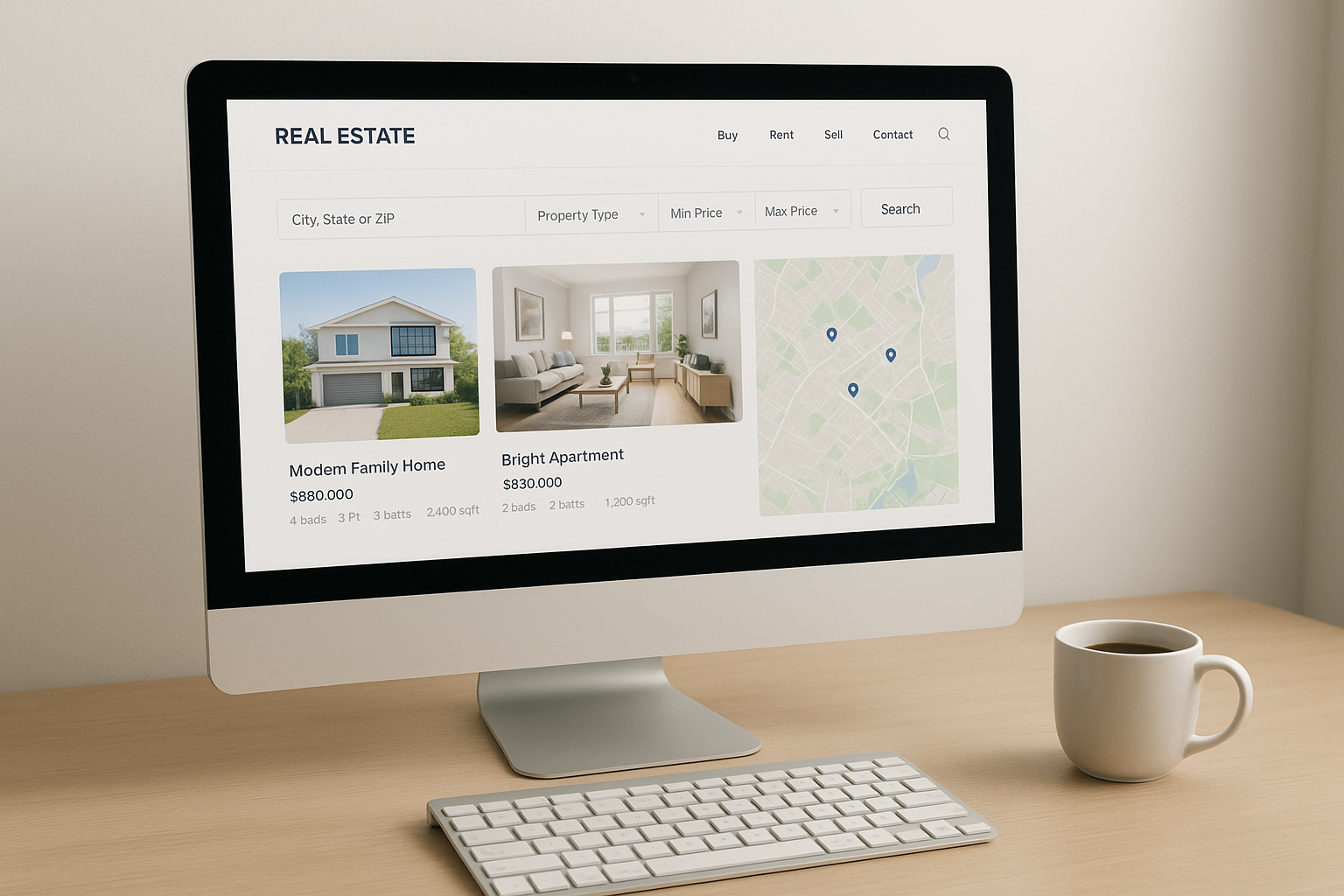
Real estate websites have become the starting point for nearly every home search today, whether someone is buying, selling, or simply browsing for inspiration. In fact, these platforms now shape how millions of people discover properties before ever contacting an agent. This guide explains what real estate websites are, how they work, and what separates a trustworthy platform from a frustrating one.
Modern real estate websites combine search filters, maps, and property data in one place.
What Are Real Estate Websites?
Real estate websites are online platforms that display property listings, photos, pricing, and neighborhood details for buyers, sellers, and renters. Most pull data directly from a Multiple Listing Service, commonly called an MLS, which agents use to share property information across a region.
In addition to listings, many real estate websites include mortgage calculators, saved search alerts, and agent directories. Some platforms also require a brief verification step, such as a "Click To Continue" prompt, before content becomes fully visible. This step confirms the visitor is a genuine user rather than an automated script.
Why Property Search Platforms Matter for Buyers and Sellers
According to the National Association of Realtors, 97% of home buyers used the internet during their home search process, and the majority started their journey on a property search platform (nar.realtor). As a result, the quality of a real estate website often shapes how quickly and confidently someone moves forward with a purchase.
For sellers, a well-optimized listing on a reputable site can mean the difference between dozens of inquiries and almost none. Consequently, understanding how these platforms function benefits everyone involved in a transaction, not just the buyer scrolling through photos late at night.
Key Features of Trustworthy Real Estate Websites
Search and Filtering Tools
Strong filtering tools let visitors narrow results by price, bedrooms, square footage, and location. For example, browsing a residential listing such as this featured property shows how detailed filters help match buyers with homes that fit their exact criteria.
Verification and Security Steps
Security matters just as much as search functionality. A secure refresh or verification step, paired with a clear technical support channel, protects both the platform and its visitors. If a page fails to load, a unique error identifier allows support staff to diagnose the problem quickly rather than guessing at the cause.
Furthermore, this kind of verification gate helps prevent automated bots from scraping listing data, which keeps information accurate for real buyers and sellers using the site.
How to Choose the Right Real Estate Website
Choosing among the many real estate websites available can feel overwhelming. However, following a simple evaluation process makes the decision much easier.
- Check listing freshness. Review a sample of properties and confirm the dates they were last updated.
- Test the search filters. Try filtering by price, location, and property type to see whether results return accurate matches.
- Review verification and security steps. Notice whether the site uses a secure prompt before loading content.
- Confirm support availability. Look for a visible technical support contact and an error identifier system.
- Compare mobile usability. Open the site on a phone and confirm listings display correctly.

Mobile usability is an important factor when comparing real estate websites.
Common Mistakes When Using Real Estate Websites
Even experienced buyers make avoidable errors when browsing online listing platforms. For instance, relying solely on outdated photos or prices without confirming details with an agent often leads to disappointment during a showing.
Similarly, skipping a verification prompt or refreshing a page too quickly can cause content to fail to load properly. In that case, contacting support with the provided error identifier, rather than repeatedly reloading the page, usually resolves the issue faster.
Another mistake is ignoring listings similar to this available residential property simply because photos look unfamiliar. Above all, buyers should treat every real estate website as a starting point for research, not the final word on a property's condition.
Online Listing Platforms vs. Traditional Property Searches
Traditional property searches relied on newspaper listings and printed flyers, which limited how quickly information traveled. In contrast, today's real estate websites update in near real time, giving buyers immediate access to new listings and price changes.
Consequently, agents now use these platforms as marketing tools, pairing listings such as this property overview with professional photography and virtual tours. This shift has made the buying process faster, though it still benefits from human guidance at key decision points.
What to Do If a Real Estate Website Fails to Load
Real estate websites are, at their core, complex systems combining databases, images, and verification layers, so occasional loading issues can happen. If a page fails to load properly, the site typically generates a unique error identifier.
Therefore, the most effective next step is contacting technical support and sharing that identifier directly, since it allows the support team to trace the specific issue in their system logs. This is often faster than attempting repeated refreshes on your own.
You can also explore listings such as this residential listing or this available home once verification completes, and visit soflorealestate.com directly for additional support resources.

Verification steps help protect data accuracy across real estate websites.
Frequently Asked Questions
What are real estate websites?
Real estate websites are online platforms that let people search property listings, view photos and details, and connect with agents or sellers. Many also include tools for mortgage calculations, neighborhood data, and secure verification steps before showing full listings.
How do real estate websites verify listings?
Many platforms use a verification or refresh step, such as a click-to-continue prompt, before displaying property data. This process helps confirm the visitor is a real user and protects the site from automated scraping or fraud.
Why do some real estate websites ask visitors to click to continue?
A click-to-continue prompt is a security checkpoint that confirms a genuine visitor before loading listing content. It reduces bot traffic and helps the site load data accurately for real users.
How much do real estate websites typically cost to use?
Most consumer-facing real estate websites are free for buyers and renters to browse. Agents and brokers, however, often pay subscription or MLS access fees ranging from tens to hundreds of dollars per month.
How long does it take to find a property using a real estate website?
It varies, but many buyers report browsing for several weeks before scheduling a showing. Setting saved searches and alerts on a real estate website can shorten this timeline considerably.
What is the difference between real estate websites and MLS systems?
An MLS, or Multiple Listing Service, is the underlying database agents use to share listing data. Real estate websites pull from MLS feeds and present that data to the public in a searchable, consumer-friendly format.
Are real estate websites safe to use?
Reputable real estate websites use encryption, verification steps, and error tracking to protect users. As a result, visitors should still avoid sharing sensitive financial details outside secure, verified forms.
What common mistakes do people make when using real estate websites?
A common mistake is relying on outdated listing photos or prices without confirming details with an agent. Another is skipping verification prompts, which can cause pages to fail to load properly.
What features should I look for in a good real estate website?
Look for accurate search filters, updated listing data, mobile responsiveness, and clear support contact options. Security features like verification steps also indicate a well-maintained platform.
Can I contact technical support if a real estate website fails to load?
Yes, most platforms provide a support channel and a unique error identifier when a page fails to load. Sharing that identifier with support staff helps them diagnose the issue faster.
Do real estate websites show accurate pricing?
Pricing on real estate websites is generally accurate when pulled directly from an MLS feed, but delays can occur. Therefore, it is wise to confirm current pricing with a licensed agent before making decisions.
How do I choose the best real estate website for my search?
Compare listing freshness, search tools, and geographic coverage across a few platforms before settling on one. Reading how a site handles verification and support can also reveal how reliable it is.
What is a unique error identifier on a real estate website?
A unique error identifier is a code generated when a page fails to load correctly. It allows technical support teams to trace the exact issue in their system logs and resolve it efficiently.
Final Thoughts on Real Estate Websites
Real estate websites have transformed how people search for homes, offering instant access to listings, pricing, and neighborhood data around the clock. Ultimately, the best platforms combine accurate search tools with secure verification steps and responsive technical support.
Whether you are comparing listings, waiting on a verification prompt, or troubleshooting a loading error, understanding how these systems work helps you navigate them with confidence. For more information on secure property browsing, visit soflorealestate.com and explore additional resources referenced throughout this guide, including Wikipedia's overview of real estate, the Consumer Financial Protection Bureau, and the National Association of Realtors.