Condos for Sale: Florida's Reserve Law Buyer Guide
Condos for sale in South Florida now carry stricter reserve rules. See what buyers must verify before closing, plus get expert guidance here.

Condos for sale across Palm Beach County look more affordable on paper than single-family homes, but Florida's post-2022 condo laws have quietly rewritten what "affordable" really means. Structural integrity reserve studies, milestone inspections, and higher reserve funding requirements now shape monthly dues, closing timelines, and even which buildings a lender will approve. Before you fall in love with a view, it helps to understand what sits behind the association's balance sheet.
Quick answer: Condos for sale in Florida must now come with a current reserve study, milestone inspection record, and financial disclosure so buyers can see whether the building has unfunded repairs. Reviewing these documents before writing an offer is the single most important step a condo buyer can take.
What Should You Check Before Buying Condos for Sale in Florida?
Condos for sale is the term covering individually owned units inside a shared building, where common areas, the roof, and the structure belong to everyone collectively. Consequently, a condo's condition depends as much on the association's decisions as on the unit itself. Before making an offer, buyers should confirm the building's reserve funding level, its milestone inspection status, and whether a special assessment is active or pending.
In addition, it is worth asking how long the current board has served and whether minutes from recent meetings mention deferred maintenance. Specifically, buildings built before 1992 face closer scrutiny under Florida's updated statutes, so older properties deserve extra attention during due diligence.
Reviewing reserve studies and financial statements is now a standard step for buyers evaluating condos for sale in Florida.
Why Florida's Condo Laws Changed After the Surfside Collapse
Florida's current inspection and reserve requirements trace directly back to the June 2021 collapse of Champlain Towers South in Surfside, which killed 98 people, according to Wikipedia's account of the disaster. As a result, state lawmakers passed sweeping reforms requiring milestone inspections and structural integrity reserve studies for most condo buildings three stories or taller.
Therefore, associations can no longer waive reserve funding for roofs, load-bearing walls, plumbing, and other structural components. Instead, they must fully fund these line items based on an engineer's cost estimate. For buyers, this means the dues advertised on a listing may not reflect what owners will actually pay once a building catches up on reserve funding. The official statute language is available through Florida's legislature, and buyers can review the current requirements directly at Florida Statute 718 before relying on secondhand summaries.
Understanding Reserve Studies for Condos for Sale
A structural integrity reserve study, often shortened to SIRS, is an engineering report that estimates the remaining useful life and repair cost of a building's major components. Specifically, it covers the roof, load-bearing elements, waterproofing, plumbing, electrical systems, and foundation. Associations use this report to calculate how much money owners must contribute to reserves each year.
For buyers comparing condos for sale, the SIRS matters more than curb appeal. A building with a completed, fully funded study is less likely to surprise owners with a sudden assessment. In contrast, a building that has delayed its study or underfunded reserves may be only one inspection away from a large bill. The table below summarizes the key differences buyers should watch for.
| Factor | Lower-Risk Building | Higher-Risk Building |
|---|---|---|
| Reserve study status | Completed and fully funded | Overdue or partially funded |
| Milestone inspection | On file, no major findings | Pending or flagged structural issues |
| Special assessments | None active in past 24 months | Recent, active, or anticipated |
How Special Assessments Affect the Price of a Condo for Sale
A special assessment is a one-time charge an association levies on owners to cover a shortfall, usually tied to a major repair. Naturally, a pending assessment can change how a buyer negotiates. For instance, if a building just approved a roof replacement assessment, the seller may need to either pay it before closing or lower the price to offset the buyer's added cost.
Above all, buyers should get assessment details in writing, including the total amount, payment schedule, and whether it can be paid in a lump sum or installments. Furthermore, Florida's purchase contracts typically specify whether the seller or buyer is responsible for an assessment levied before closing, so this detail belongs in the contract, not a verbal promise.
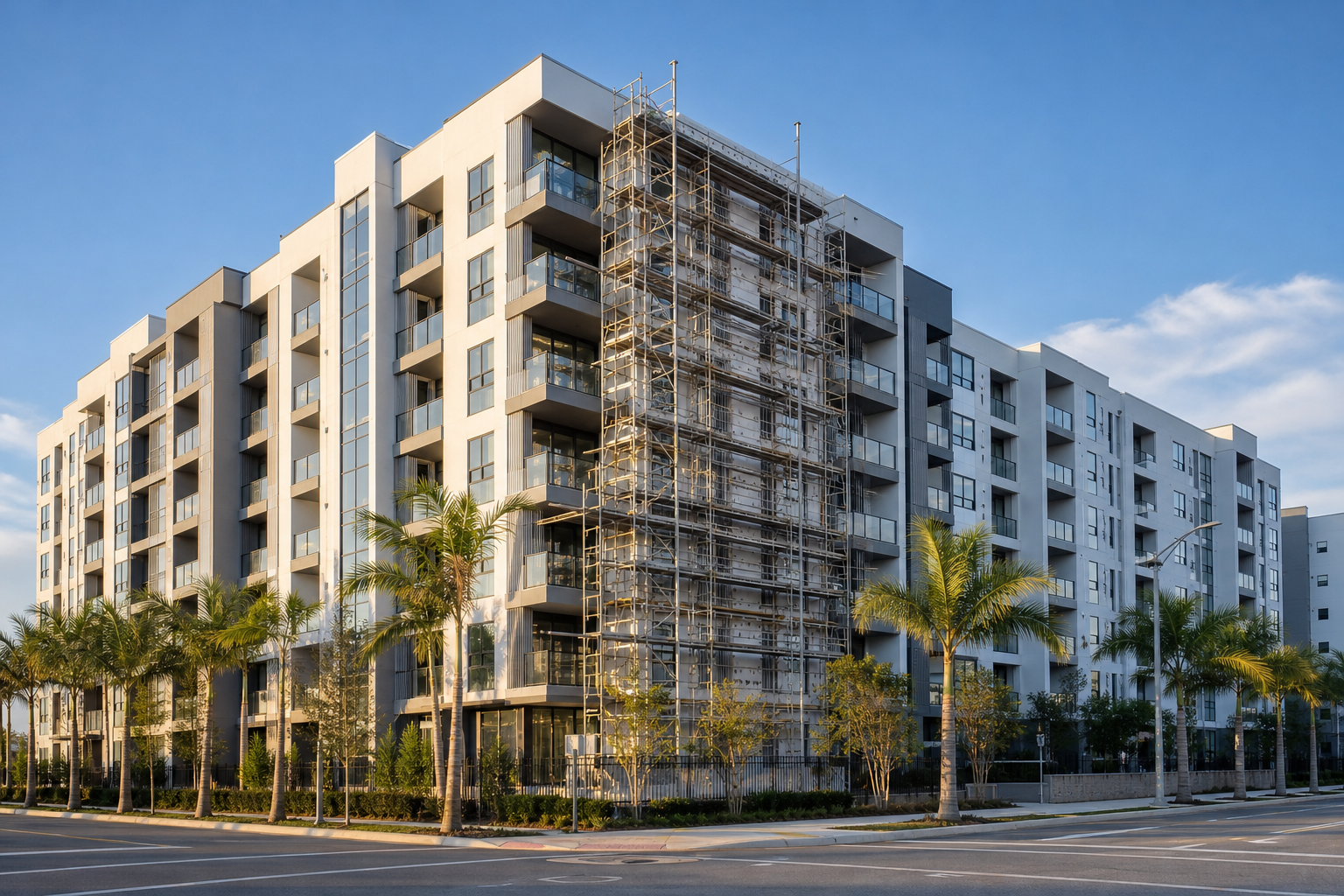
Exterior repair work is a common sign that a building has recently addressed, or is still working through, a special assessment.
Lending and Insurance Hurdles for Buying a Condo in Florida
Financing a condo is different from financing a single-family home because the lender evaluates the entire building, not just the unit. Under Fannie Mae's condo project standards, buildings with insufficient reserves, unresolved structural findings, or high investor ownership can fail project approval entirely, which blocks conventional financing for every unit inside.
Meanwhile, insurance has tightened as well. Associations facing higher repair costs often see master policy premiums rise, which flows into monthly dues. As a result, buyers should ask for the current master insurance declaration page and confirm with their own lender, early in the process, whether the specific building currently carries approval. Otherwise, a buyer can lose weeks discovering financing problems after already waiving contingencies.
How to Evaluate Condos for Sale Before Making an Offer
Following a consistent process protects buyers from costly surprises after closing. Consider these steps before submitting an offer on any Florida condo.
- Request the full financial statement and reserve study. Ask the listing agent or association manager for the most recent audited financial statement and structural integrity reserve study so you can see how much money is actually set aside for future repairs.
- Confirm milestone inspection status. Verify whether the building has completed its required milestone inspection, and if issues were flagged, request the engineer's report and the board's remediation timeline in writing.
- Ask about pending or recent special assessments. Find out whether owners currently pay a special assessment or whether the board has discussed one, since this directly affects your monthly cost after closing.
- Verify lender and insurance approval standards. Confirm with your lender that the building currently meets condo project approval guidelines, and ask your insurance agent whether the master policy adequately covers the structure.
- Review the condo questionnaire and insurance policy before closing. Read the completed condo questionnaire and master insurance declaration page carefully with your agent or attorney so there are no coverage surprises at the closing table.
Working With a Local Team on Condominiums for Sale
Because Florida's reserve and inspection rules vary by building age and height, local experience matters more than it used to. SoFlo Group at COMPASS, led by Principal Agent Thomas Kornitzer, works with buyers and sellers throughout Boca Raton, Delray Beach, and Palm Beach County on residential and commercial transactions, bringing more than 25 years of combined experience to condo due diligence.
For instance, the team can help pull an association's financial documents, interpret a reserve study, and flag red flags before a buyer's deposit is at risk. You can browse a current Palm Beach County property listing or review this active South Florida listing example to see how listing details are presented, and compare them with another recently listed property. For buyers ready to start a search or sellers preparing to list, the full property search tools are available at soflorealestate.com, or you can reach the team directly at 561.645.9000.
Frequently Asked Questions About Condos for Sale
What must condos for sale in Florida disclose to buyers?
Florida law requires condo associations to provide buyers with the financial statement, reserve study results, and milestone inspection report before closing. These documents reveal whether the building has unfunded repairs or upcoming special assessments.
How do condos for sale differ financially from single-family homes?
Condos for sale come with monthly association dues and shared responsibility for building-wide repairs, while single-family homes do not. As a result, a condo's true monthly cost can shift significantly if the association raises fees or issues an assessment.
What is a structural integrity reserve study?
A structural integrity reserve study, or SIRS, is an engineering inspection that estimates the cost of major future repairs for a condo building's structure, roof, plumbing, and other components. Florida now requires these studies for most buildings three stories or taller.
Why did Florida change its condo laws?
Lawmakers tightened condo inspection and reserve rules after the 2021 Surfside building collapse exposed gaps in maintenance oversight. The updated statutes aim to catch structural problems earlier and ensure associations save enough money to pay for repairs.
How can a special assessment affect the price of condos for sale?
A pending or recently approved special assessment can lower a seller's negotiating position because buyers factor the extra cost into their offer. In some cases, the assessment is split between seller and buyer as part of the purchase agreement.
How much do HOA fees typically add to the cost of condos for sale?
Monthly HOA fees for condos for sale in Palm Beach County commonly range from a few hundred dollars to well over a thousand depending on amenities, building age, and reserve funding levels. Buyers should request a fee history, not just the current rate, since reserve-law compliance has pushed many dues higher.
How long does it take to close on condos for sale in Florida?
A typical condo closing takes 30 to 45 days, though it can extend longer if the lender requires additional condo project approval documents. Buildings with incomplete reserve studies or unresolved litigation often cause the longest delays.
What mistakes do buyers make when shopping for condos for sale?
The most common mistake is focusing only on the list price and ignoring the association's financial health. Skipping the reserve study, milestone inspection report, and recent board meeting minutes can lead to costly surprises after closing.
Are condos for sale harder to finance than houses?
Financing can be more complex because lenders must approve the entire condo building, not just the individual unit, under Fannie Mae and Freddie Mac guidelines. Buildings with low reserves, high investor ownership, or unresolved repairs may be denied project approval, limiting loan options.
What should buyers ask for before making an offer on condos for sale?
Buyers should request the reserve study, the last two years of financial statements, the milestone inspection report, and the condo questionnaire used for lender approval. Reviewing these documents before writing an offer helps avoid renegotiating after the fact.
Can condos for sale pass lender approval with deferred maintenance?
Buildings with significant deferred maintenance or structural concerns often fail standard lender project approval until repairs are scheduled or completed. This is why confirming a building's inspection status early protects both the buyer's financing timeline and their deposit.
Is it still safe to buy condos for sale in older buildings?
Older buildings can be a sound purchase when they have completed required inspections and maintain fully funded reserves. The safest approach is verifying compliance documents directly rather than relying on a building's age or appearance alone.

Confirming a building's reserve and insurance status before closing helps buyers enjoy their new condo with fewer surprises.
Final Takeaways for Condo Buyers
Condos for sale throughout Palm Beach County still offer strong value, low-maintenance living, and access to amenities many single-family homes cannot match. However, Florida's reserve and inspection laws mean the smartest buyers now look well beyond the listing photos. By requesting the reserve study, confirming milestone inspection status, checking for special assessments, and verifying lender approval, buyers can avoid the financial surprises that have caught others off guard since the Surfside reforms took effect. Working with an experienced local team, such as SoFlo Group at COMPASS, adds another layer of protection when sorting through association documents and negotiating around assessment costs. With the right due diligence, buying one of the many condos for sale across South Florida can still be a confident, well-informed decision.
